


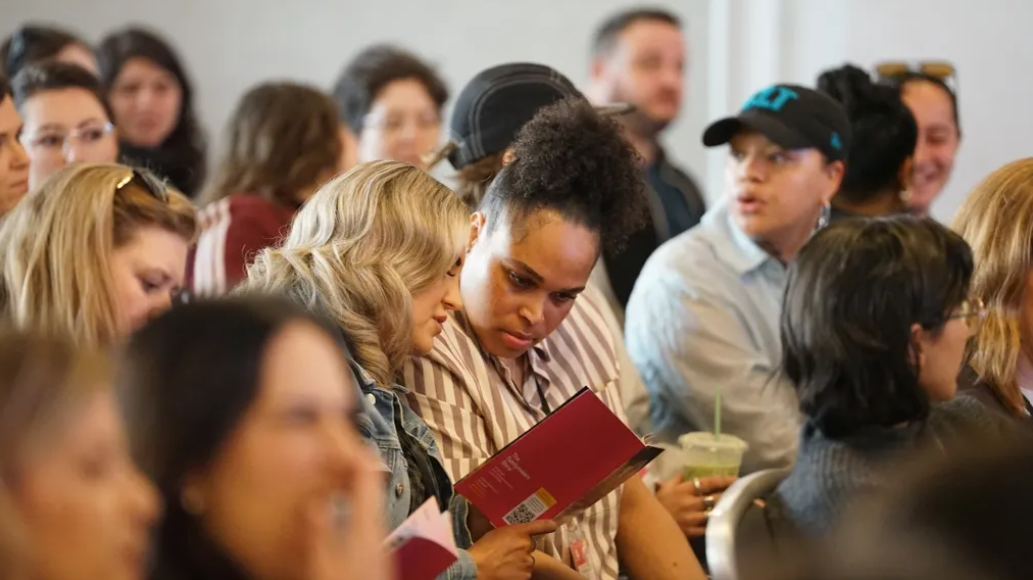
On Saturday 18th April, 600 people walked through the doors of the De Vere Grand Connaught Rooms in London for the fourth Familymakers Show — and the energy in the room felt like something that has been a long time in the making. Because in many ways, it has.
Where We Started
In the 1980s and 1990s, fertility care in the UK looked very different for LGBTQIA+ individuals and same-sex couples. Access to treatment was shaped not just by clinical need but by prevailing societal attitudes — and for many, the answer from clinics was simply no.
Within that landscape, pioneers at London Women's Clinic — including Dr Kamal Ahuja, our Scientific and Managing Director, and Mimi Arian-Schad, our Director of Nursing and Person Responsible to the HFEA — were among those working to reshape how fertility care was delivered. Not by waiting for the culture to change, but by changing it themselves.
The tabloids at the time dubbed Dr Ahuja "the gayby doctor." London Women's Clinic wore that label with pride then. We wear it with pride now.
What followed over the decades was a gradual but fundamental shift — towards greater inclusivity, clearer pathways and a fertility sector that increasingly recognised that the desire to build a family is universal, even if the routes to it are not. Familymakers is where that history becomes visible. Not as something in the past, but as something that continues to shape how care is delivered, experienced and understood today.
What the Familymakers Show Actually Is
Now in its second year and having travelled to cities across the UK, the Familymakers Show is unlike any other fertility event. It is not a clinical open day. It is not a sales environment. It is a community gathering — joyful, affirming and created specifically for LGBTQIA+ individuals, same-sex couples and everyone exploring what family building looks like for them.
The London event brought together over 600 attendees at every stage of their journey, alongside a carefully chosen community of exhibitors including Paths to Parenthub, Access Fertility, DIVA magazine, Donor Conception Network, Nappy Endings Surrogacy Agency, London Egg Bank and London Sperm Bank — charities, community platforms, fertility finance providers and queer support groups, all under one roof.
The partnership with DIVA magazine sits at the heart of what makes Familymakers work. The collaboration brings together London Women's Clinic's clinical expertise and DIVA's deep roots within the lesbian, bisexual and queer community — creating a space where attendees arrive not as patients navigating a medical system, but as people who belong.
No LGBTQIA+ person exploring fertility treatment should have to feel alone in that process. The Familymakers Show exists to make sure they don't.
The Conversations That Mattered
What sets Familymakers apart from a standard fertility event is the quality and honesty of the conversations it creates. Across the day, speakers covered egg freezing, surrogacy, donor eggs and sperm, reciprocal IVF, IUI, accessible IVF and fertility coaching — not as a curriculum, but as a conversation.
Kit Morey shared their personal story with the room — the kind of first-person account that no clinical brochure can replicate, and that reminds every person in the audience that their path is valid and possible.
Data Scientist & Communications Lead at LWC, Jemma Garratt presented on how data is changing treatment approaches — a powerful reminder that inclusive fertility care is not just about access, but about the ongoing work of making sure that the science itself reflects the diversity of the people it serves.
Patient advocates returned to the stage to share their journeys, including Jake and Hannah Graf, whose visibility and openness about their own fertility journeys and family continues to shift what feels possible for others.
And Dr Lamanna — a fertility specialist herself — shared something that stopped the room: that 12 years ago she froze her own eggs, and last year she had a baby from that freeze. It was a reminder that fertility care is deeply human work, on both sides of the consultation table.
What LGBTQIA+ Fertility Care Looks Like at London Women's Clinic
For anyone reading this who is exploring their own fertility options, here is what London Women's Clinic can offer:
- IUI with donor sperm — for single women and same-sex female couples, IUI is often the simplest and most accessible starting point, with donor sperm from London Sperm Bank.
- IVF and ICSI — for same-sex female couples and single women where IUI has not been successful or is not clinically appropriate.
- Reciprocal IVF — one of the most profound ways a same-sex female couple can share the journey, with one partner providing the eggs and the other carrying the baby. Both partners are biologically connected to the child they bring into the world together.
- Surrogacy with donor eggs — for same-sex male couples and single men, our team coordinates the full surrogacy pathway, with access to donor eggs through London Egg Bank.
- Egg freezing — for anyone who wants to take control of their fertility on their own terms.
- Donor conception guidance — London Egg Bank and London Sperm Bank give patients direct access to two of the UK's most established and diverse donor programmes, with expert support throughout the selection process.
All treatments are available with 0% finance across our clinics, and our team has been supporting LGBTQIA+ patients since before it was standard practice. Whoever you are and however you are building your family, you will be welcomed here.
Why This Matters Beyond the Event
Six hundred people in a room on a Saturday in April is significant. But what The Familymakers Show represents is bigger than a single day.
It is evidence that the fertility sector has changed — and continues to change — in response to the real and diverse needs of the people it serves. It is a reminder that access to information, community and expert guidance should not depend on your sexual orientation, your gender identity or your relationship structure.
And it is a demonstration that London Women's Clinic's commitment to LGBTQIA+ inclusive fertility care is not a marketing position. It is a founding principle, built into this organisation over four decades, expressed in the treatment pathways we have developed, the barriers we have helped to dismantle, and the families we have had the privilege of helping to build.
Are you exploring fertility treatment as an LGBTQIA+ individual or couple? Our experienced team is here to guide you through every pathway, with honest, expert and inclusive support from the very first conversation.


Comments